Glaucoma is one of the leading causes of permanent vision loss, but many people don’t realize they have it until it’s too late. That’s why it’s often called the “silent thief of sight.” The tricky thing is that glaucoma usually develops slowly and without pain, so noticing it early can make all the difference.
At Piedmont Eye Center, we focus on catching glaucoma early and creating treatment plans that help protect your vision for the long term. Here’s what you need to know about symptoms, diagnosis, and treatment.
What Is Glaucoma?
Glaucoma isn’t just one condition—it’s a group of eye diseases that damage the optic nerve, which sends images from your eyes to your brain. Most of the time, this damage is linked to higher-than-normal pressure inside the eye. Over time, if it goes untreated, glaucoma can lead to vision loss or even blindness.
Early Signs and Symptoms
The most common type, open-angle glaucoma, is sneaky—it develops slowly and usually without any noticeable symptoms. Some early signs can include:
- Gradual loss of side (peripheral) vision
- Trouble seeing at night or in low light
- Blurry vision
- Seeing halos around lights
A less common type, called acute angle-closure glaucoma, can happen suddenly and requires immediate medical attention. It can cause severe eye pain, headaches, nausea, blurred vision, and halos around lights. If this happens, don’t wait—call your ophthalmologist or go to the ER right away.
Who’s at Risk?
Glaucoma can affect anyone, but some people are more likely to develop it. Risk factors include being over 40, having a family history of glaucoma, diabetes, high blood pressure, previous eye injuries, or long-term steroid use. Certain ethnic groups, including African American and Hispanic individuals, are also at higher risk.
If any of this sounds like you, scheduling regular eye exams at Piedmont Eye Center is especially important.
How We Diagnose Glaucoma
Because it’s so easy to miss, regular comprehensive eye exams are key. During your exam, our team may:
- Measure your eye pressure
- Check your optic nerve
- Test your peripheral vision
- Use advanced imaging like OCT (Optical Coherence Tomography)
These tests let us catch glaucoma before it causes noticeable vision loss.
Treatment Options
The good news is that glaucoma can usually be managed successfully. While it can’t be cured, we can slow or stop damage to your optic nerve. Treatment might include prescription eye drops, laser procedures, or surgery, depending on your situation. We always create a plan that fits your lifestyle and needs.
Protect Your Vision
The best way to protect your eyes from glaucoma is early detection. If you haven’t had a comprehensive eye exam recently—or if you’re at higher risk—make an appointment at Piedmont Eye Center, where you will find Lynchburg’s only glaucoma team. Catching glaucoma early can save your vision, and we’re here to help every step of the way. Meet Lynchburg’s newest glaucoma specialist, Mark Paauw, MD.
For a quick video about glaucoma, click here.
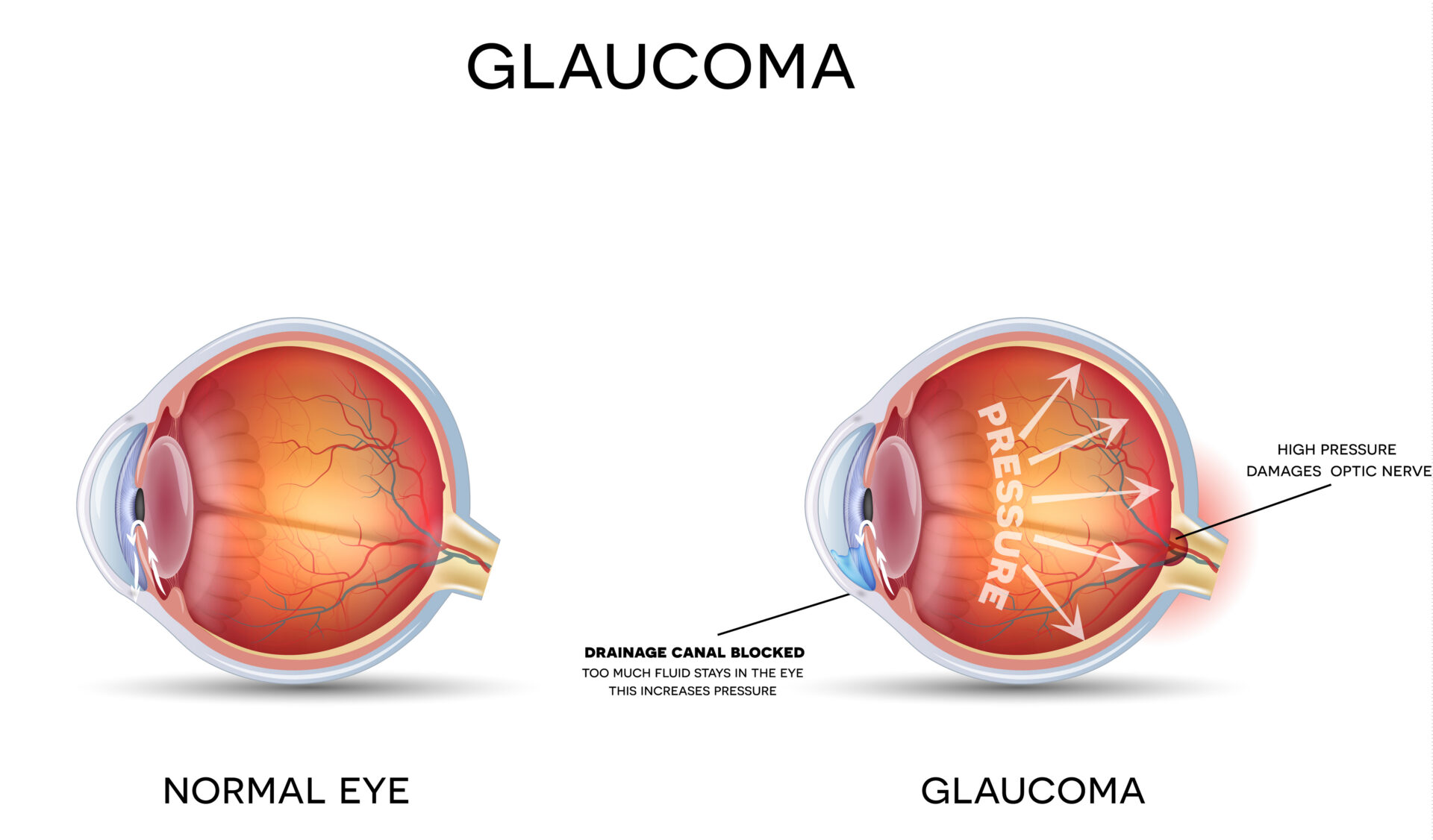
Glaucoma. Detailed anatomy of Glaucoma and healthy eye.